

San Diego beach pier

  • There is more than one way to overcome an addiction

    There is more than one way to overcome an addiction

    Addictions run the full gamut from dependence on a substance to being addicted to an activity.  A few examples are alcohol, heroin, cocaine, video games and gambling. The reality is that alcohol, drugs and other addictions have short term benefits (relaxation, pleasurable feelings) that are then overshadowed by the longer term (even the next day) destructive consequences of these actions. 

    There is more than one way to overcome an addiction and this is clearly a case of one size does not fit all.  Some people begin with detox and an inpatient treatment program that can last several weeks.  Others participate in Alcoholics Anonymous or other twelve step support groups.  Others do it on their own.  While we often hear that one must “hit bottom” before they are ready for help, in reality many people intervene when they realize it is having a significant effect on their life without getting to the bottom of the barrel.

    Psychologists are uniquely trained to help people with addictions through Cognitive Behavioral Therapy and Dialectical Behavior Therapy and other methods.  This involves not only focusing on the addiction, but also on other life problems.

    For starters a good workbook is Sex, Drugs, Gambling and Chocolate that takes a rational approach to overcoming addictions.  This can be used as an alternative to AA and twelve step programs or as an adjunct.  It introduces the idea of doing a cost-benefit analysis of the substance or behavior to make rational decisions.

    Check out Harvard Medical School’s five action steps for quitting an addiction.  If you would like to abstain or moderate an addictive behavior you can set a psychologist appointment with us to begin mapping a plan.
  • Recommended Reading

    Here are a few useful books that I recommend that cover a vairety of topics ranging from depression to anxiety to addiction, as well as books on other psychological and career issues.

    Feeling Good by David Burns, MD

    A practical guide for overcoming depression by a leader of cognitive-behavioral therapy.

    Stopping the Noise in Your Head: the new way to overcome anxiety and worry by Reid Wilson, Ph.D.

    Identifies the difference between useful worry as a call to action vs useless anxiety (the noise in your head) and how to overcome crippling anxiety

    Sex, Drugs, Gambling and Chocolate: A workbook for overcoming addictions by Arthur Thomas Horvath, Ph.D., Director of Practical Recovery Services in San Diego

    An excellent workbook for practical guidance on how to cope with addictive behavior and bad habits for the mildly or seriously addicted.

    The Road Less Traveled by M. Scott Peck, M.D.

    An excellent book for someone entering psychotherapy about loving relationships and spiritual development.

    What Color is Your Parachute? A practical manual for job hunters and career changers by Richard Bolles

    A useful book for those considering career changes in the context of a total life

    Now, Discover Your Strengths by Marcus Buckingham and Donald Clifton, Ph.D.

    A book to help you capitalize on your specific strengths

    Authentic Happiness by Martin Seligman, Ph.D.

    Written by the founder of Positive Psychology

    For relaxation and anxiety reduction view videos on YouTube on mindfulness meditation.

  • Psychotherapy in the movies

    Psychotherapy in the movies

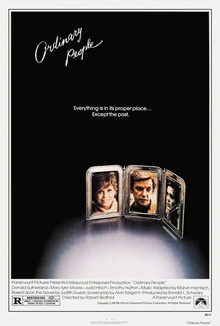
    We have all seen movies with psychologists just passively listening to a patient on the couch and in other movies they are portrayed in a more comedic light (Analyze This).  The key element for success in therapy, however, is the beneficial relationship that develops between the patient and the therapist.  Ordinary People is a movie from the 80s that portrays that relationship very well.  

    It portrays a family torn apart by tension and tragedy.  The teenage son (played by Timothy Hutton) cannot connect with his mother (played by Mary Tyler Moore) but does find a connection with his father (played by Donald Sutherland).  He is able to get through his grief and pain from the loss of his brother with the help of his psychologist.  Judd Hirsch artfully plays the role of a psychologist who knows how to connect with an adolescent in psychological pain.

    This movie, directed by Robert Reford, explores family dynamics in the light of tremendous grief and shows the redemptive quality of good therapy.  It is well worth streaming the movie at home.